
The Reality Most Artists Face
You release a track. It gains traction.
Then at some point, you come across another song that sounds… very similar.
Same melody. Same structure. Same overall feel — just different enough to create uncertainty.
At that point, the question becomes:
Is this coincidence, influence, or actual copying?
This situation is becoming increasingly common.
The Real Problem Isn’t Copying — It’s Detection
Most artists assume that registering their copyright is enough.
It isn’t.
The real issue is not that copying happens — it’s that it often goes unnoticed until it’s too late.
By the time it’s identified:
The other track may already be monetized
It may be widely distributed
Revenue may already be lost
Early detection is what actually protects value.
What AI Song Matching Actually Does
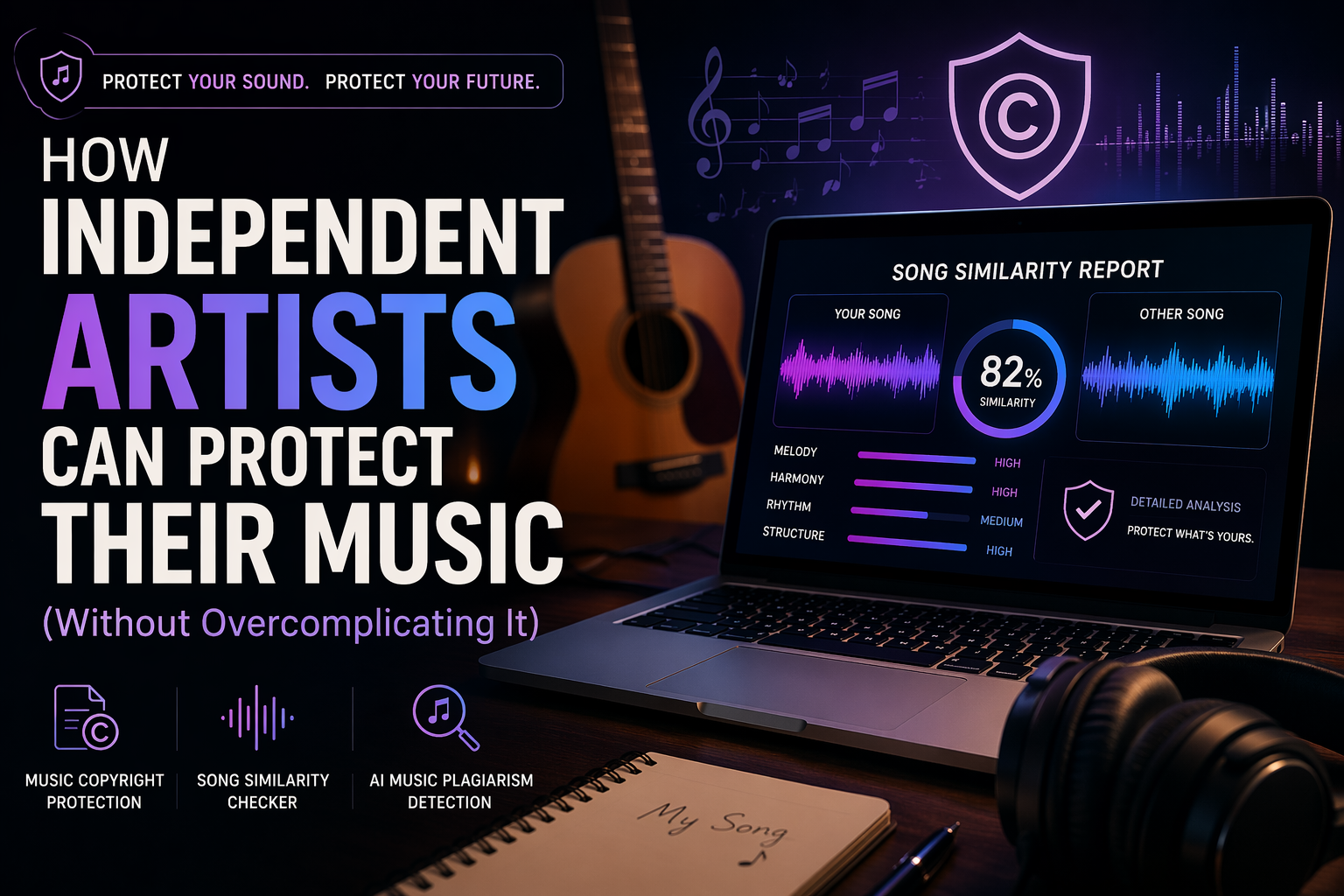
AI-based song matching goes beyond simple listening comparisons.
It analyzes:
Melodic structure
Harmonic progression
Rhythm and composition patterns
This allows for a structured comparison between two tracks based on measurable elements — not subjective opinion.
Tools like Audiori provide a report that helps determine how similar two songs are from a technical standpoint.
Why This Matters More Than Ever
There are three major shifts driving this need:
1. AI-Generated Music
Music can now be created at scale, often producing outputs that unintentionally resemble existing work.
2. Global Distribution
Once a track is released, it is instantly available worldwide, increasing exposure — and risk.
3. Fragmented Collaboration
Remote producers, marketplaces, and distributed workflows create more room for ownership disputes.
Where This Becomes Practical
Instead of relying on instinct, artists can:
Upload their original track
Compare it with another track
Receive a structured similarity analysis
This removes ambiguity and replaces it with clarity.
Common Situations Where This Matters
A producer suspects their beat has been reused
A songwriter hears a similar melody elsewhere
A collaborator releases work independently
A licensing partner questions originality
In all of these cases, the key requirement is clear documentation.
Protecting Revenue and Long-Term Value
Music is intellectual property, and intellectual property is a long-term asset.
If similarity or reuse goes undetected:
Revenue can be misattributed
Licensing opportunities can be impacted
Catalog value can be diluted
Protecting the work early helps protect the career over time.
Final Takeaway
Independent artists may not have access to legal teams or large resources.
However, they do have access to tools that provide clarity.
Understanding whether two tracks are genuinely similar is no longer guesswork — it can be measured.
That shift alone changes how artists protect their work.